
Colorado Employers Are Exploring New Approaches to Childcare as Workforce Needs Grow
From employer-supported centers to broader community partnerships, businesses are looking for ways to address childcare as a workforce issue.
For many Colorado families, access to reliable, affordable childcare affects whether parents can work, how many hours they can work and how long they stay with an employer.
That reality is prompting more employers to look beyond traditional workplace benefits and consider how they can help address childcare challenges facing their workforce.
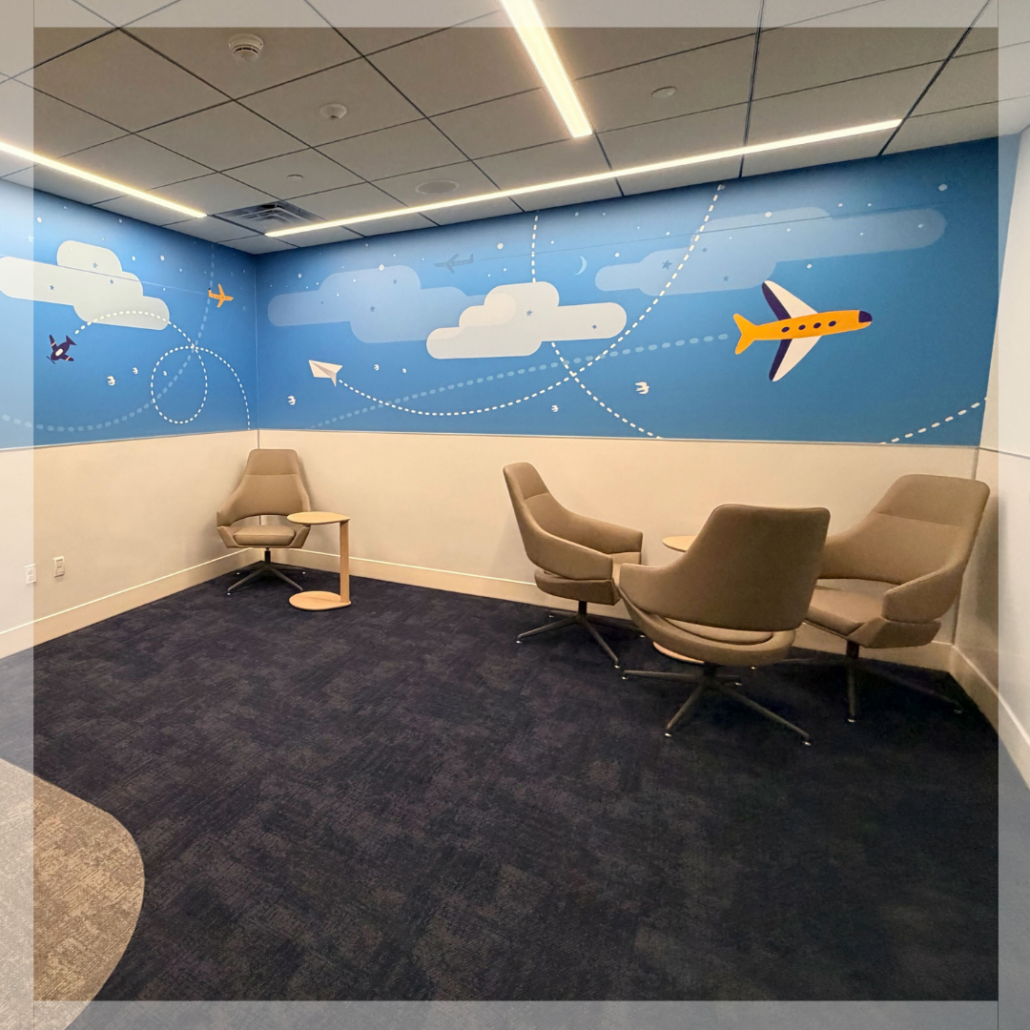
Denver International Airport (DEN) is among those exploring what that could look like. The airport is preparing to open a 20-slot drop-in childcare center to support its new Center of Equity and Excellence in Aviation. It is also studying the feasibility of childcare options for its broader workforce of approximately 43,000 employees.
The effort reflects a growing recognition among employers and economic development leaders that childcare is closely connected to workforce recruitment, retention and stability.
Addressing a childcare gap
When Stephanie Burke moved from Southern California to Colorado in late 2021, she expected to find childcare for her two young children. Instead, she contacted 28 childcare centers in the Green Valley Ranch neighborhood and throughout the Denver metro area and found either no infant openings or waitlists that could stretch 12 to 18 months.
Without family or other support nearby, Burke’s husband left his aerospace engineering job and stayed home with their children for nearly a year.
Eventually, a neighbor provided care while the family waited for an opening at a licensed childcare center.
Burke now leads DEN’s Center of Equity and Excellence in Aviation, where the airport identified childcare as a barrier to participation in its workforce training programs.
“We built this facility to develop talent pipelines in the aviation industry and for the region,” Burke said. “We identified that a barrier to participation in our programs was childcare.”
The challenge extends beyond individual families. A 2024 Colorado survey found that 32% of parents reported quitting a job because of problems finding or affording childcare, while another 20% reported being let go or fired as a result of childcare issues.
At DEN, a survey of 1,000 employees found that more than half of parents with young children had considered leaving their jobs or reducing their hours because of childcare challenges. According to Burke, 84% had rearranged their work schedules because of childcare, and nearly 75% had arrived late or left work early.
The airport also analyzed childcare availability in 21 ZIP codes where more than half of its badged employees live. The analysis found licensed childcare capacity for just 11% of infants and 21% of toddlers in those communities.
For an employer with early morning departures, overnight shifts and rotating schedules, a traditional 9-to-5 childcare model may not meet employees’ needs.
From a family challenge to a workforce issue
DEN has been studying options for its broader workforce for more than two years and has narrowed its focus to a potential childcare facility near the airport. The airport is working with Executives Partnering to Invest in Children (EPIC) on the final phase of a feasibility study.
For EPIC President and CEO Nicole Riehl, the growing interest from employers represents a significant shift in how businesses view childcare.
“Prior to the pandemic, many business leaders didn’t have childcare on their list of top five things to talk about,” Riehl said. “Post-pandemic, business leaders saw how much those caregiving needs could impact their own bottom lines.”
As employers have experienced the workforce implications firsthand, childcare has increasingly become part of conversations about recruitment, retention, absenteeism and workforce stability.
In Adams County, childcare is increasingly part of broader regional workforce discussions about housing, transportation, workforce development and economic vitality.
The Adams County Regional Economic Partnership has also heard concerns from employers about limited childcare availability, staffing shortages at centers and the difficulty of finding care that aligns with employees’ work schedules.
Geography adds another layer of complexity, as employees may live in different communities from where their employers are based. Addressing these challenges requires regional coordination to better align childcare solutions with the needs of both businesses and the families they employ.
The business case for childcare
For employers considering an investment in childcare, the potential workforce benefits must be weighed against significant costs.
For an employer the size of DEN, improving employee retention could meaningfully strengthen workforce stability and the bottom line. Although childcare solutions require significant investment, they may also help employers address workforce challenges and better support employees and their families.
Because DEN’s feasibility study is ongoing, the airport does not yet have estimates for the size, capacity or cost of a potential facility.
EPIC’s work with employers has shown that even smaller employer-supported childcare centers can require substantial annual operating investments. One model for a 54-space center projected first-year operating expenses of approximately $878,000, rising to approximately $1.1 million by year five, excluding rent.
Some Colorado employers have moved forward with investments of their own.
Denver-based education technology company Guild converted office space at its Republic Plaza headquarters into an 82-space childcare center. The Beehive opened in 2021 after an approximately $1 million conversion and provides employees with tuition priced below comparable market rates.
Steamboat Ski Resort also established a 35-child center with support from a state grant that covered half of the approximately $1 million startup cost.
These examples demonstrate that employer-supported childcare can take different forms, from direct operation of a center to partnerships, financial assistance and other approaches that help employees access care.
No single solution
Employer-supported childcare is not intended to solve every challenge facing Colorado’s early childhood system.
The Boulder Chamber, for example, explored a potential childcare center in partnership with companies located in the Flatiron Business Park. The project ultimately did not move forward after construction and operating costs proved difficult to justify.
Guild views the Beehive not as a profit center but as an employee benefit. And while employers can play an important role, company leaders acknowledge that they cannot address the broader childcare challenge alone.
“Employers offer a really unique and important perspective,” said Alana Brandes, Guild’s chief people officer. “But I don’t think they should be the only answer. They can’t be the only answer.”
That perspective is increasingly reflected in conversations across Colorado, where employers, community organizations, childcare providers, policymakers and other partners are exploring ways to expand access and better align care with workforce needs.
For DEN, that means considering care that works for an unusually diverse workforce. For other employers, it may mean supporting existing providers, helping employees afford care or partnering with community organizations to expand capacity.
“Solving childcare requires partnership, period,” Burke said. “No single organization can solve these challenges.”
As more employers examine the connection between childcare and workforce stability, the question is becoming less about whether businesses have a role to play and more about what role makes sense for their workforce, their communities and their business.
This article was originally published in The Denver Post. View the full article here.